



The ongoing debate between Bitcoin and gold has never been more vital for safe-haven investors as economic uncertainty looms. Both assets have their proponents, each claiming superiority in turbulent financial markets. Understanding their roles as hedges against economic instability is crucial for investors looking to safeguard their wealth.
The Role of Gold as a Safe-Haven Investment
Gold has long been regarded as a safe-haven investment, particularly during periods of economic strife. Historical data underscores its status as a reliable hedge against inflation and currency devaluation. Investors typically flock to gold when concerns over monetary policy arise, thereby driving its prices higher. In fact, as outlined by strategist James Thorne, as investor confidence wanes in economic reforms, a surge in gold prices reflects a growing skepticism about the future of the U.S. economy and its recovery potential. Thorne asserts that, “For the record. Bitcoin is a bet on Trump’s success. Gold is a bet on America’s failure” according to recent insights. This highlights how market perceptions influence the usage of gold as a protective asset.
In volatile markets, gold’s tangible nature often calms nerves. It serves as a stable way to preserve capital when traditional investments falter. Understanding these dynamics is essential for investors who prioritize safety over high-risk opportunities. Furthermore, in times of crisis, the tangible qualities of gold often lead to a spike in demand, reflecting its reliability compared to equities and other higher-risk assets.
Economic Impact on Gold Valuation
Economic factors significantly impact gold prices. When market uncertainty prevails, rising inflation rates and declining investor confidence typically lead to increased gold purchases. As countries worldwide are grappling with debt concerns, many are looking to gold as a fool-proof strategy to safeguard their investments. The volatility seen in global financial markets during the pandemic has reinforced this tendency. Investors are aware that while stock markets may rebound, gold maintains intrinsic value.
Bitcoin’s Rise as an Alternative Safe Haven
In recent years, Bitcoin has positioned itself as an alternative to traditional safe-haven assets. While initially observed as a speculative investment, its characteristics are now being viewed through the lens of economic turmoil. Bitcoin operates independently of traditional financial systems, which some investors find appealing during government-driven economic crises. According to industry experts, the notion that Bitcoin can offer a hedge against inflation aligns with its increasing acceptance as a digital form of gold. However, this perspective raises questions about Bitcoin’s volatility relative to gold’s stability.
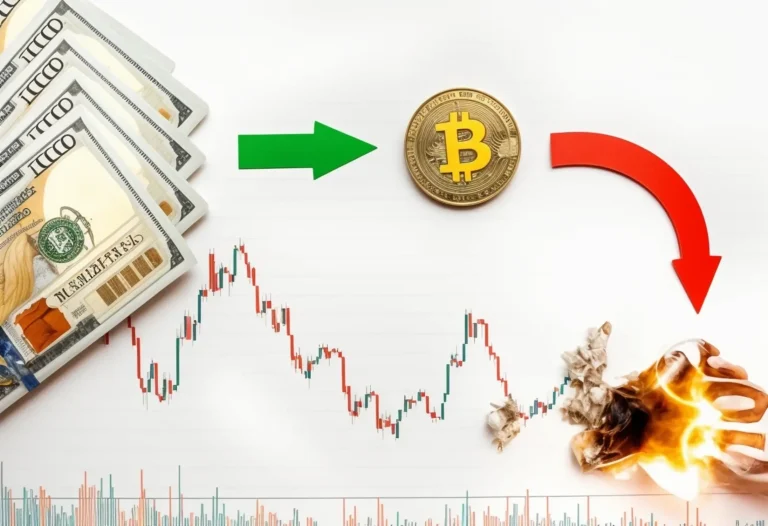
The cryptocurrency’s price has demonstrated both extreme highs and lows, contributing to a perception of risk associated with it. This uncertainty has led experts like Ran Neuner to reflect critically, stating, “For the first time in 12 years, I’m questioning Bitcoin’s thesis.” This sentiment echoes the apprehensions surrounding Bitcoin’s role amidst economic downturns, as discussed in the context of Bitcoin’s performance during market stresses. Investors must weigh the benefits against the risks involved in adopting this digital asset as their primary safe haven.
Navigating Cryptocurrency Volatility
Given Bitcoin’s inherent volatility, investors must remain cautious. Unlike gold, which has a long-standing historical precedent as a stable investment, Bitcoin’s price can fluctuate dramatically in short time frames, raising doubts about its reliability as a true safe-haven investment. Cryptocurrencies may offer lucrative opportunities but come at the cost of higher risk. As analysis indicates, without substantial liquidity to support growth, the long-term viability as a safe haven remains to be seen. Understanding this volatility is vital for any investor looking to blend cryptocurrencies into their portfolio.
Conclusion: Weighing Options for Safe-Haven Investments
As investors assess their portfolios in an increasingly unpredictable economic landscape, the choice between Bitcoin and gold becomes pivotal. While gold’s historical track record solidifies its position as a time-tested safe haven, Bitcoin offers something new: the prospect of high returns tied to the digital economy. Knowing the economic perspectives driving these investments can help investors make more informed decisions tailored to their risk appetites and investment goals.
Ultimately, both assets can coexist in a well-rounded investment strategy. By blending gold’s stability with Bitcoin’s potential, investors may navigate the turbulent waters of modern economic challenges.